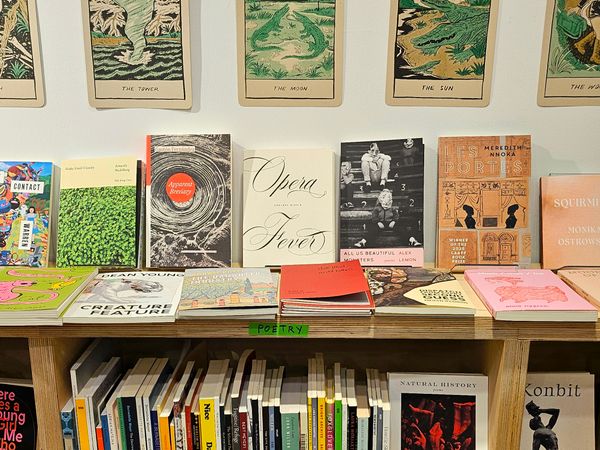
Now, I learn like I tour a house
Once, all I wanted to be was smart. Now, I learn like I tour a house. (Notes on intellectual humility, good conversation, and foolish consistency)

As a young girl, all I wanted to be was smart. Achieving top marks in school was certainly a compelling external incentive, but that came much later. Like the average child, it began with a genuine desire to learn, and my preferred method of learning happened to be the written word.
I remember, for instance, the day I learned to differentiate between the lowercase g and y with clarity. At five years old, rifling through the coil-bound address book by our telephone — it had an impressionist painting of a ballerina on the cover — I tried to copy the word Mandaluyong, the city I grew up in, from someone’s address entry. Mistakenly, I spelled it as Mandalugong, and seeing a curve where there should be a gap, I understood that y was a different letter altogether.
I learn best this way, being left to my own devices with the printed word. Books, pamphlets, cosmetic bottles, election posters, store signage, trivia pocketbooks. I unfolded all the inserts of CDs lying around the house and squinted at the tiny lyrics or credits. I wondered often how frequently people actually called up the toll-free number on toothpaste tubes about reporting adverse reactions. At the grocery checkout, I perused through the open copies of K-Zone, Total Girl — both now discontinued — seasonal magazine specials, and slim sudoku volumes, and on some days asked my mother or father to buy a publication for me.
Decades later and I am still in love with language and the knowledge transfer it facilitates, though I no longer concern myself with being smart. I soon realized that “being smart” had more to do with external perception, and for a long time I hinged my self-worth on my intelligence. Where many conditions of my existence are beyond my control — my physical appearance or familial, cultural, or socio-economic circumstances — my intelligence is malleable in my own hands. It is measurable, valuable, and cannot be taken away from me. Environment and opportunity — through my father’s modest library, my Montessori education, access to the television and internet at a fairly young age, travel experience — allowed me incredible liberties to learn as I pleased, but ultimately it was the application of my own desire and effort that nurtured my education. Because I worked so hard on it, I guarded the perception of my intelligence fiercely like a delicate gem, minding what percentile I ended up in, what grades I received, what honors I was awarded. This competitive spirit helped me as a girl, certainly, but as I approach my 30s, I’ve come to value intelligence in myself and others differently. External markers of intellectual ability like credentials, publications, and awards are of some relevance, but I’m more interested in the process and purpose of knowledge acquisition. Why do I want to learn this? How did I or that person learn that? To what ends? Who or what is served by it?

In this vein, I have developed four exercises in intellectual humility —
Crossing the foyer slowly: the space of pre-understanding
Much of the poetry I enjoy I often don’t understand at the first read. There was a time this embarrassed me, that I couldn’t get past the opacity that some of my peers seem to see through with ease. Despite being unable to “grasp” a poem, however, I am often already moved by some other element of it, like its rhythm, or perhaps a strange metaphor, a curious use of punctuation marks, or simply its visual appearance. Something about it intrigues me, tugging at my curiosity in coy invitation. I have come to find this not as a symptom of my intellectual shortcoming, but a moment of pre-understanding.
Pre-understanding, as I’ve come to think of it, is nonverbal. Some knowledge — like muscle memory, musicality, even instinct — is registered by the body in a manner that my brain can’t quite yet articulate. Words still evade me, and I don’t yet have a concept to neatly wrap the experience within. This space is the metaphorical foyer or entryway in the house of my knowledge building: I walk in slowly, observing without judgment the color of the walls or the framed photos, or even the smell of the air. Here, I don’t yet acquire the full picture of the house, but it gives me a sense of what lies in the rooms beyond. It prepares me.
This surrender has been helpful in learning a new language. When I spent a month in Ljubljana last year, the turning point in my Slovene was the poetry reading I attended just days before my flight home. Naturally, everyone — save for one American poet who, despite having lived in the country since the late 90s, didn’t even attempt to greet the crowd in Slovene — spoke in their native language. For hours, I listened to poetry in a language I could only catch in disjointed words and phrases, but I savored the sound and cadence of them, never mind my lack of comprehension. I’d even chuckle when the crowd laughed, partly to seem like I belonged, and partly because collective emotions are truly infectious. Days later, I visited my residency host’s apartment and met his lovely partner C and their four-year-old daughter. C would occasionally talk to their daughter Z and, to everyone’s surprise, I found that I understood their small conversations. Later, at the bus stop, I successfully asked a stranger for directions back to my neighborhood in straight Slovene, something I was certain I would have been unable to do just days before. I was convinced it was those four hours at the poetry reading, fully immersed in the melodies and architecture of Slovene in the dimly-lit room, that primed me to speak what I had been casually studying for only a handful of weeks.

I’ve been employing the same technique in learning French by watching subtitled Francophone reels in between my daily lessons, or in studying theory I find complex. I just keep going, aspiring not to fully understand just yet, only to immerse my mind and body in the new sounds and shapes. With time, consistency, and repeated visits, understanding will follow. The poem will reveal itself in layers; grammar will fall into place with a soft click.
Sitting quietly in the living room: “Let me think about that.”
During silence in the middle of a conversation, especially one where opposing views are exchanged, an insecure ego tends to swell and fill the awkward space like a balloon monster. I’ve seen this in myself. Afraid to “lose” the debate or be perceived as unintelligent, I have, in the past, defensively continued to talk even though my grasp of the argument has weakened. More likely than not during those instances, I would have failed to properly assess the contrarian point, doubling down instead on what I have already said. What began as a conversation would devolve into a volleying of ideas neither party wishes to consider. No knowledge on either side is gained.
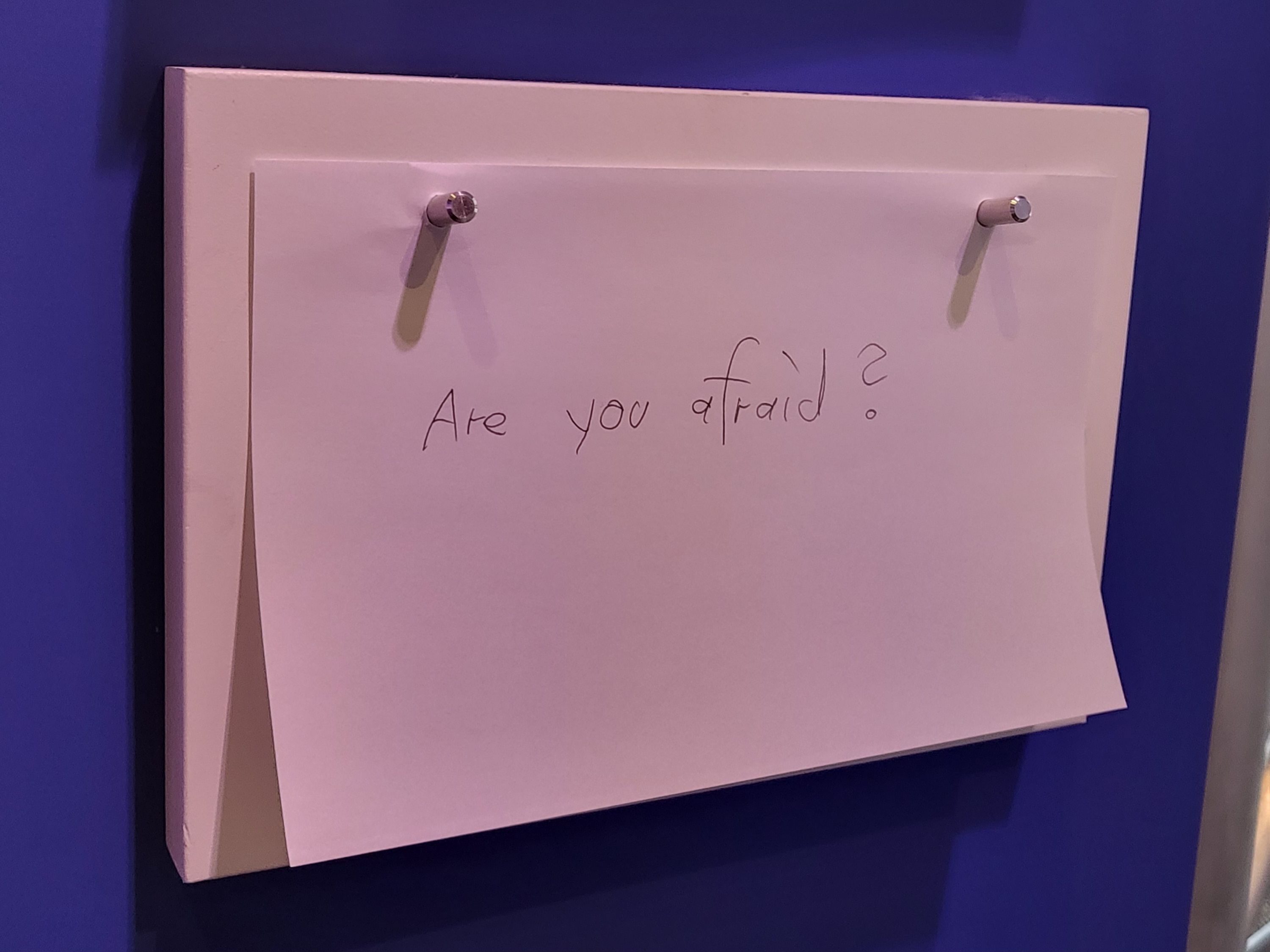
Now, I’ve learned to ask for a pause. Let me think about that. I want to chew on that for a minute. This was awkward and difficult at the beginning. At times, my companion would wear a subtle expression of triumph on their face when I make this request, interpreting it as a sign of my concession. I was distracted by this perception at first, so it took some practice to actually focus on contemplation. Splitting my attention between perception management and thinking compromises my ability to process the information well, so I had to relieve myself of the burden of the former. My objective is not to “win”, I remind myself, but to express my thoughts as clearly as possible, and to listen to the other person with genuine curiosity and openness. Only this way have I gained new insights from perspectives I historically would have dismissed, or, in allowing my position to be fairly challenged, strengthened my stance on an issue.
As much as I admire sharp, quick-witted conversationalists, I presently don’t possess the skills to be one, so I’ve had to come to terms with my pace. It can be slow, but that time to think is necessary for me; I know that now, and refrain from hurrying myself. After all, if the person I am speaking with is truly interested in a conversation, I trust that they will honor this need.
Silence, here, serves as an active element of good conversation.1 The living room is soft and inviting because of it, and here I have learned to lounge a little longer than usual. I graciously accept offered water or tea and allow the clink of glassware to be the only sound in the room, if only for a moment. Then, taking in the arrangement of the chairs and my host’s body language, I take a breath and begin.
A house is meant to be inhabited: the point of knowledge
When I visit a house for the first time, I gravitate immediately to the nearest bookshelf. One’s library says much about a person. Are there cookbooks? A stack of self-help paperbacks? Weathered, leatherbound classics, romance, Eastern philosophy, physics, political memoirs? Maybe there aren’t any aside from the coffee table art books. Maybe they collect paintings or family photos instead.
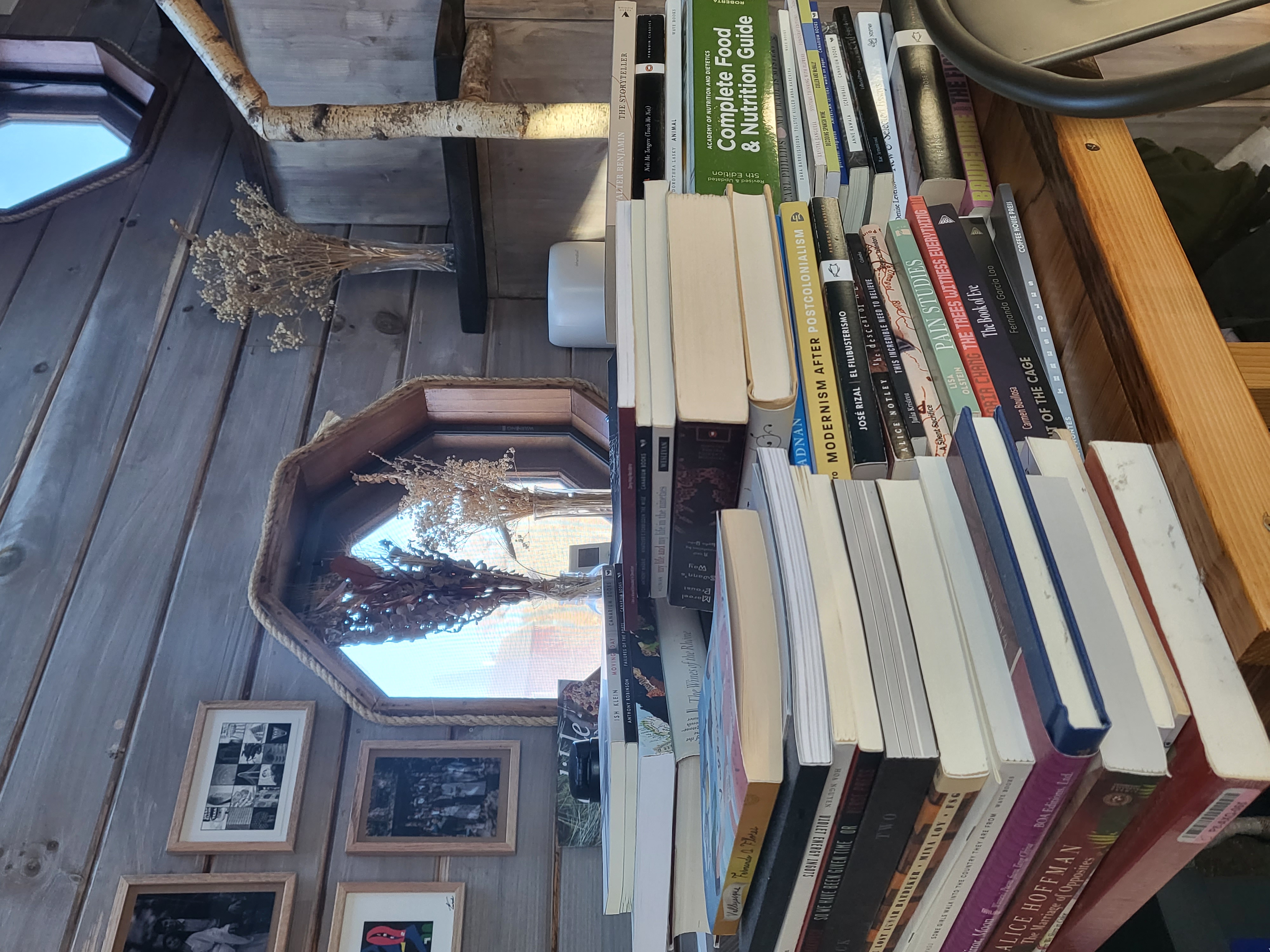
I then seek out the heart of the home; that space, often the most prominent one, with the most signs of life. The kitchen that always smells like someone just finished cooking. A living area that doubles as a work space, indicated by the folding desk kept perpetually open by one end of the worn-out couch. That corner in a studio apartment with the cushioned chair, potted plants, and coffee cup stains on the table by the window.
Like the objects we collect and decorate our homes with, the knowledge we seek out means something. As choices we make, they reveal our personalities, values, and priorities. Of all the things in the world to collect or study, why this? Why design your rooms this way? Is your house meant to host family and friends? Is it purely a private refuge? What heirlooms or knickknacks are on display?
In light of these questions, I’ve been reflecting on my many, scattered pursuits over the years. More than anything, I pursue knowledge towards well-roundedness — not for the sake of it, but because I find this the best way to engage with the world fully. Should I find myself in conversation with a Canadian academic, Cebuano plumber, or teenage science whiz, I wish to be able to ask them good questions and possibly surprise them with insights of my own. Given the physical disadvantages of my small physique, I want to know how to use simple machines in my favor. I want to know enough about money to manage and grow my resources sustainably. I want to know how to start a fire, navigate with a map and compass, apply first aid. I want to understand enough about cars to ask the mechanic the right questions. I want to eat and cook well because food is life, and I quite enjoy the pleasures of living. I want to learn the histories of wine, fashion, and bookmaking because encoded in them is a wealth of information that links almost infinitely with everything else. The fiber used in clothing is telling of the region’s flora, its silhouettes the values of the times; the quality of wine reveals its terroir, where biochemistry, history, anthropology, and topography intersect; the formats of books reveal the limitations of available technology, its mass production enabling the wider dissemination of ideas that would come to shape culture and consciousness.
Yes, yes — so much technology has been developed precisely to render the acquisition of many of those skills unnecessary. Why learn to read a map when one can ask Google for directions? Why practice a new language when one has a pocket translator? Why learn basic carpentry or survival skills when one can hire a professional on demand through an app? Why even practice writing, illustration, or photography when AI can do it all in seconds with a single prompt?
Myself, I do it for the pleasure of the process. There is value in the work required to learn something. It resides in the muscles exercised in practice, which withers in disuse. The happy accidents, the test of one’s resolve, the neural links I create through mental and physical labor. These are the subtle elements that distinguish one house from another; these lovely traces of a human life.
Rearrange the house as necessary: against foolish consistency
Yes, you are no longer a guest in this metaphorical house of knowledge building. It’s yours now. Move or dispose of the furniture as you like. Repaint the trimming, change the wattage of the light fixtures, retile the bathroom.
In an age of personal branding and curation, change is undesirable.2 For the chronically online, there is a heightened awareness that everything we share online will forever exist somewhere as hard evidence of who we are and what we stand for. We can be measured up against old photos and tweets that, while once true, may no longer resemble us at present. I think this pushes us towards one of two outcomes — to clutch tightly onto an established brand or identity through curation, or to embrace the inconsistency. While it can be argued that the former is merely a performance, I think we can subconsciously embody it in our real, inner lives, and unwittingly force ourselves into boxes we’ve outgrown. The latter, on the contrary, can be difficult to trust despite it being our nature. It requires conscious effort to extend myself and others grace when caught in a moment of inconsistency, but when I succeed, I am stunned by the beauty of its aliveness. Who would have dreamed the bird from the reptile?
In many ways, this is the essence of my newsletter, semper femina. I reserve forevermore the right to change my mind and contradict myself as new information and experiences nudge me towards evolution. I reserve the right to err, and hope always for the opportunity to atone or make amends where I must.
This exercise in embracing change was inspired by a Ralph Waldo Emerson quote Michael and I have been discussing lately:

The unspoken assumption in this celebration of changeability is the presence of honesty and humility. My inconsistency is not a performance of whimsy or obfuscation, but an honest expression of my person at a given moment.
From all I’ve learned and cherished, here is what I believe, and here is what I am able to do with what I know. Thank you for stopping by. Check back again tomorrow, next month, seven years from now.
How far I’ve come; two years ago I wrote this piece on silence and how unbearable I had once found it. ↩
HushI grew up with the idea that if I sit in quiet for too long, ghosts will start speaking to me. Through the shimmering, vibrating hum of the silence in my bedroom, disembodied voices would, in my imagination, glint into my ear, hushed, unintelligible, chilling. I believed that, like the third eye, once I unlock this secret skill, the door will forever be open and the dead—from the indifferent to the malicious—would never leave my shoulders. Lian Sing
I explore generalism a little more deeply in the October issue of Epistolaria, available digitally to paid subscribers. ↩
Maybe I was never meant to have a nicheThis essay is included in the October issue of my epistolary zine, EPISTOLARIA. Project subscribers receive the zine, which includes this essay, a limited edition print, book recommendations, and fragments of conversation, via post. Paid Substack subscribers get access to the digitized version below. Please consider upgrading your Substack subscription to read the essay below in full or Lian Sing
From Emerson’s essay “Self-Reliance”, 1841. ↩